Fabex
Designing a cross-border wallet for receiving, converting, and spending global funds.
Details
Overview
Fabex is a mobile fintech application that enables users in Nigeria to receive USD, manage Naira balances, fund wallets with stablecoins, convert currencies instantly, and spend globally using a virtual USD card.
The product came to me as a rough idea — the core value proposition was clear, but the product thinking, design system, and feature flows were all starting from zero. Over four weeks, I took Fabex from concept to a fully designed mobile experience: defining the product architecture, building a design system from scratch, and designing the core wallet modules end to end.
The Problem
More Nigerians are earning, receiving, and transacting across borders — freelancers getting paid in USD, remote workers with international clients, users who hold and move stablecoins. But the tools available to them are fragmented. Receiving, converting, spending, and withdrawing typically happen across separate products, each with its own interface, fee structure, and trust model.
The cost isn't just inconvenience. In fintech, fragmented experiences are experienced as risk. When users can't quickly understand their balance, the exchange rate they're getting, or what a transaction will cost them, they hesitate — or abandon the product entirely.
Fabex needed to solve for more than access to cross-border finance. It needed to solve for clarity, continuity, and confidence across the full lifecycle of moving money.
Research
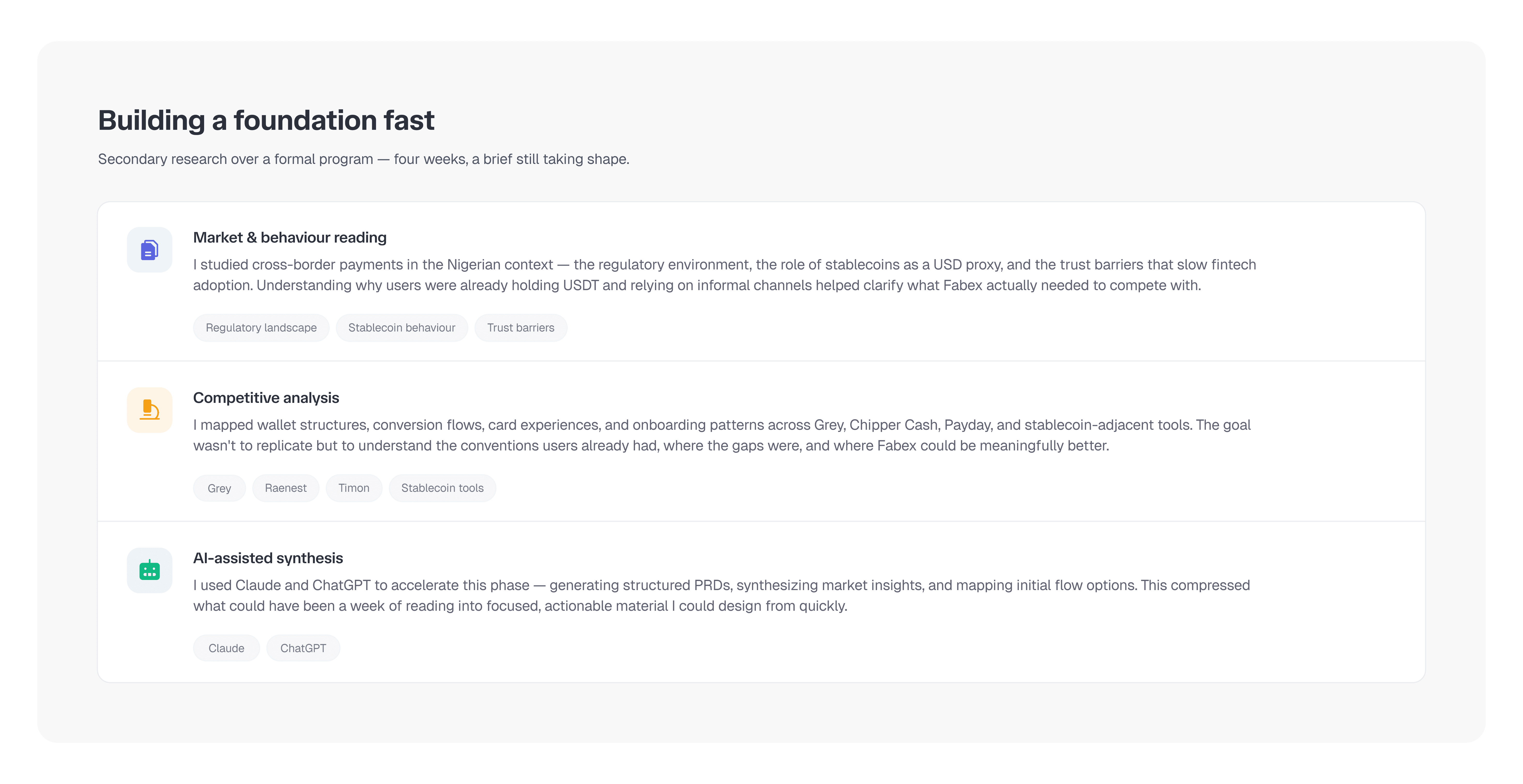
With a four-week timeline and a brief that was still taking shape, there wasn't room for a formal research program. Instead, I focused on secondary research to build a solid enough foundation to make informed design decisions quickly.
Users
Three primary user types shaped the wallet model and the priority of features:
Remote earners and freelancers.
People receiving payment in USD who need a reliable, low-friction path to hold, convert, and withdraw value locally. For this group, speed and rate transparency matter most.
Global spenders.
Users who want to pay internationally — subscriptions, platforms, services — using a virtual USD card without depending on separate tools.
Crypto-adjacent users
People comfortable with stablecoins who want a simpler way to fund a wallet and convert value into usable fiat outcomes.
Design Principles
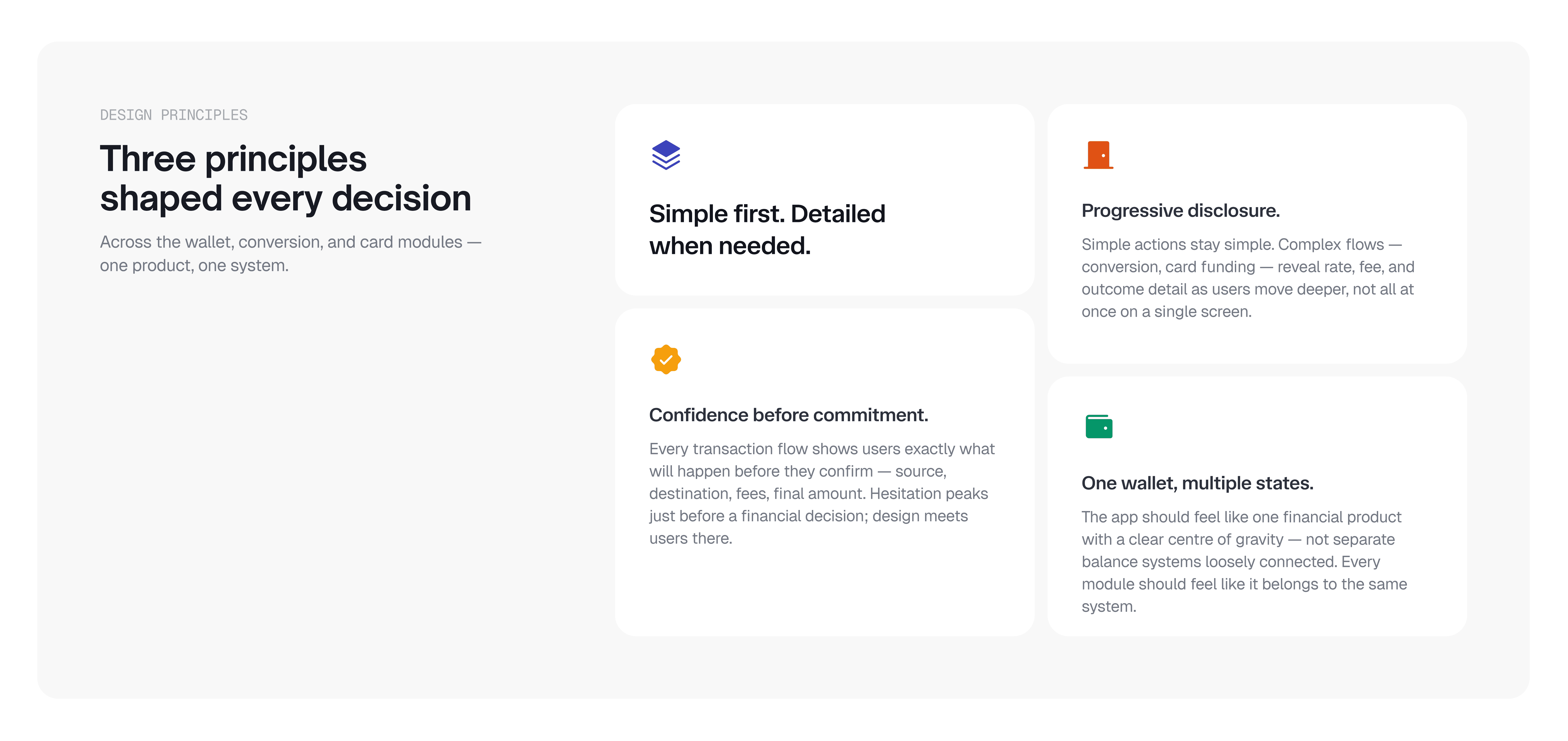
Three principles shaped every decision across the product:
What I Designed
The goal was to avoid two failure modes simultaneously: too much automation erodes trust; too many review prompts make the assistant feel useless and get ignored.
Wallet — The centre of the experience
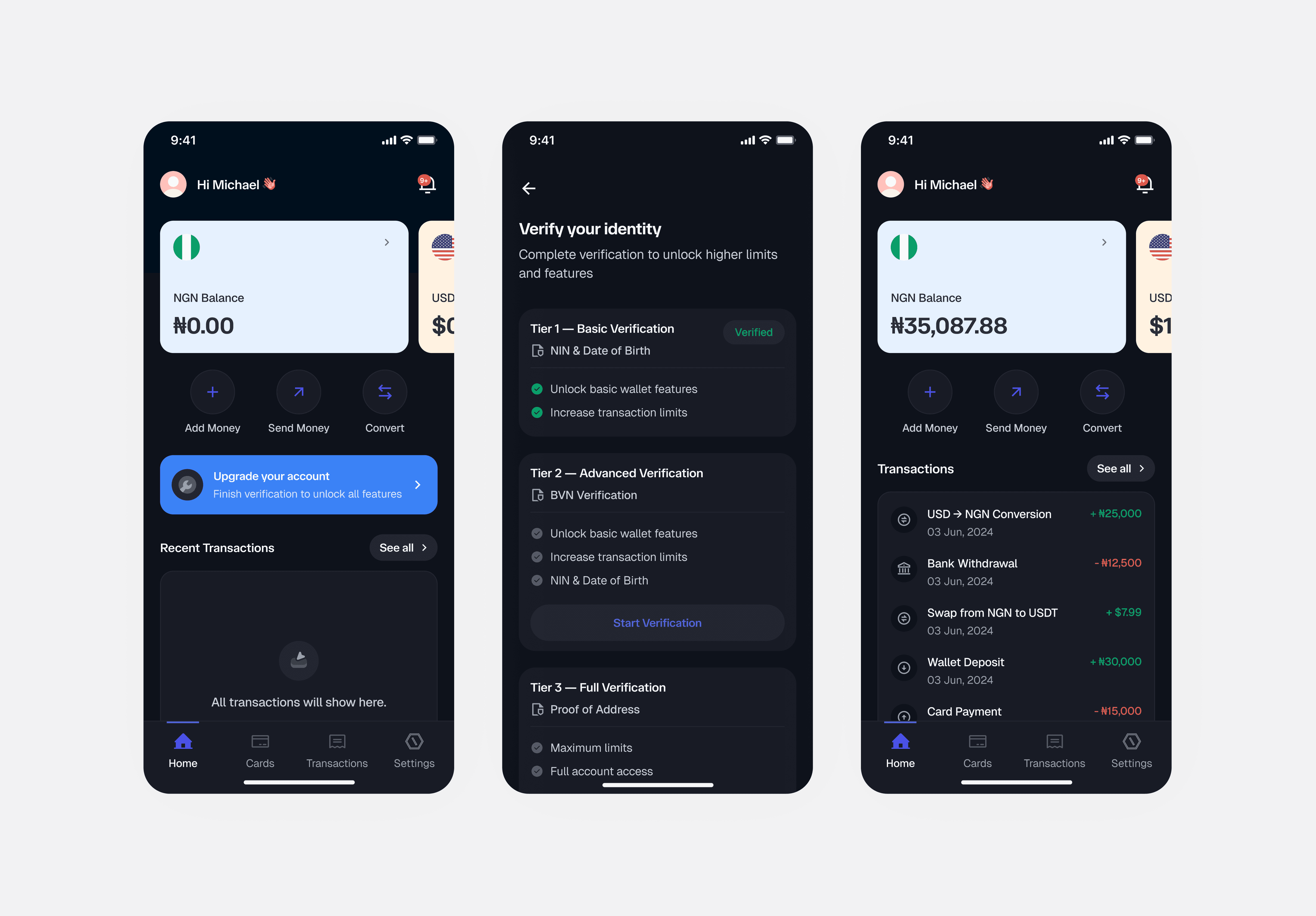
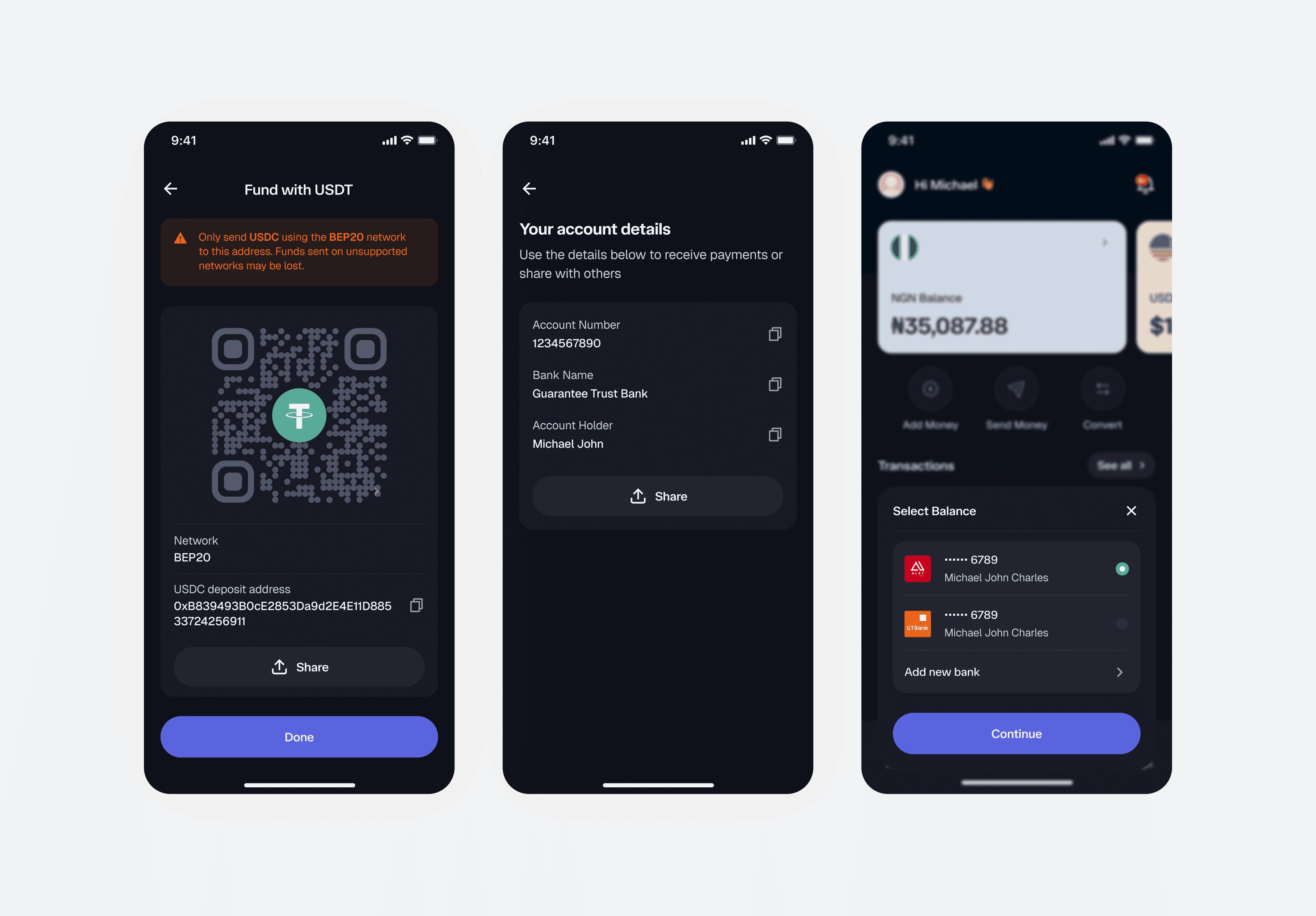
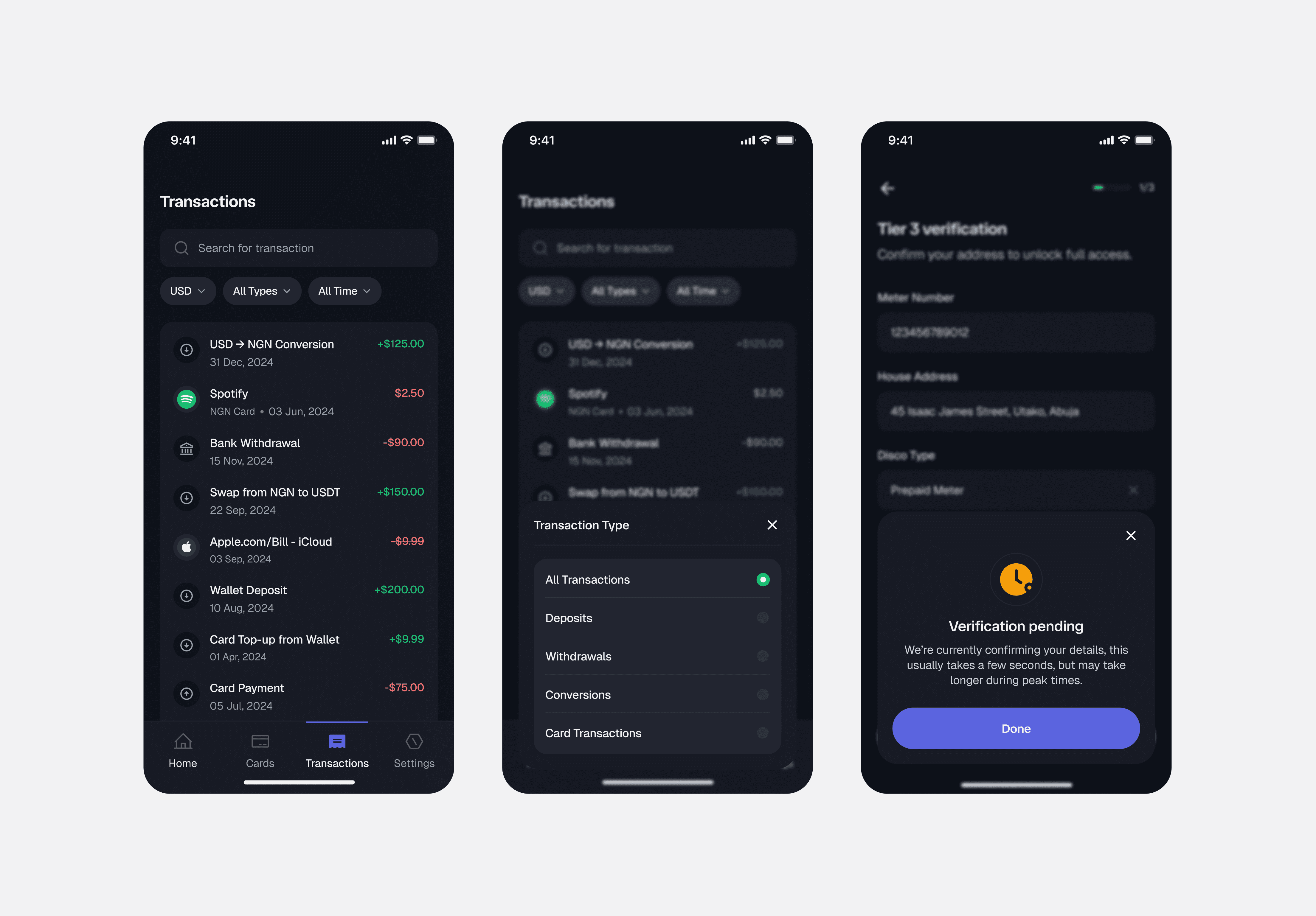
The wallet screen served as the product's home base — the place users land, orient themselves, and decide what to do next. The design had to answer three questions at a glance: how much money do I have, in what currencies, and what can I do with it.
I designed the wallet to show balances across USD and Naira clearly, with quick-action entry points into the most common flows — receive, convert, withdraw, pay. The hierarchy was built around the user's most likely next action, not a comprehensive list of everything the product could do.
Conversions
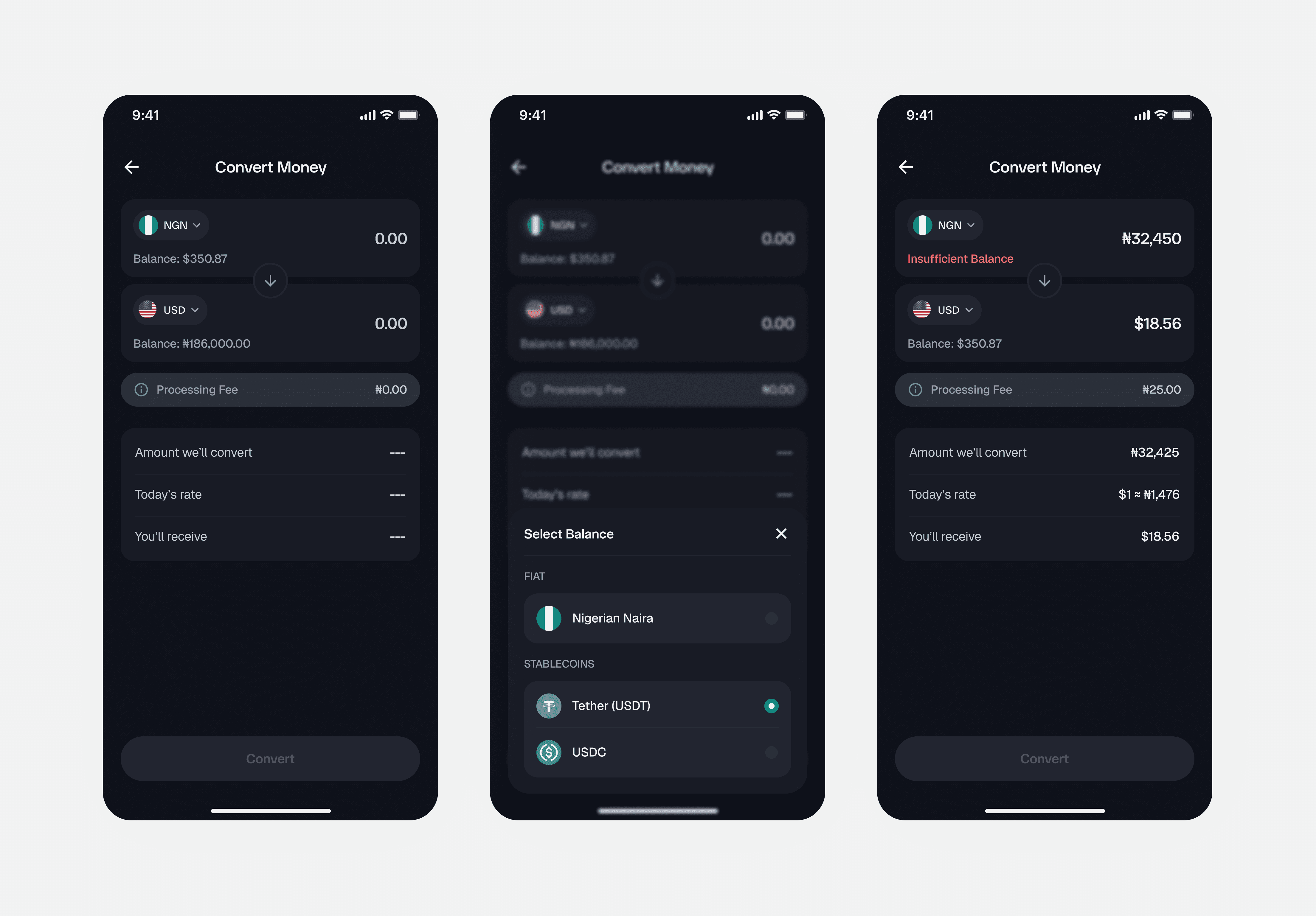
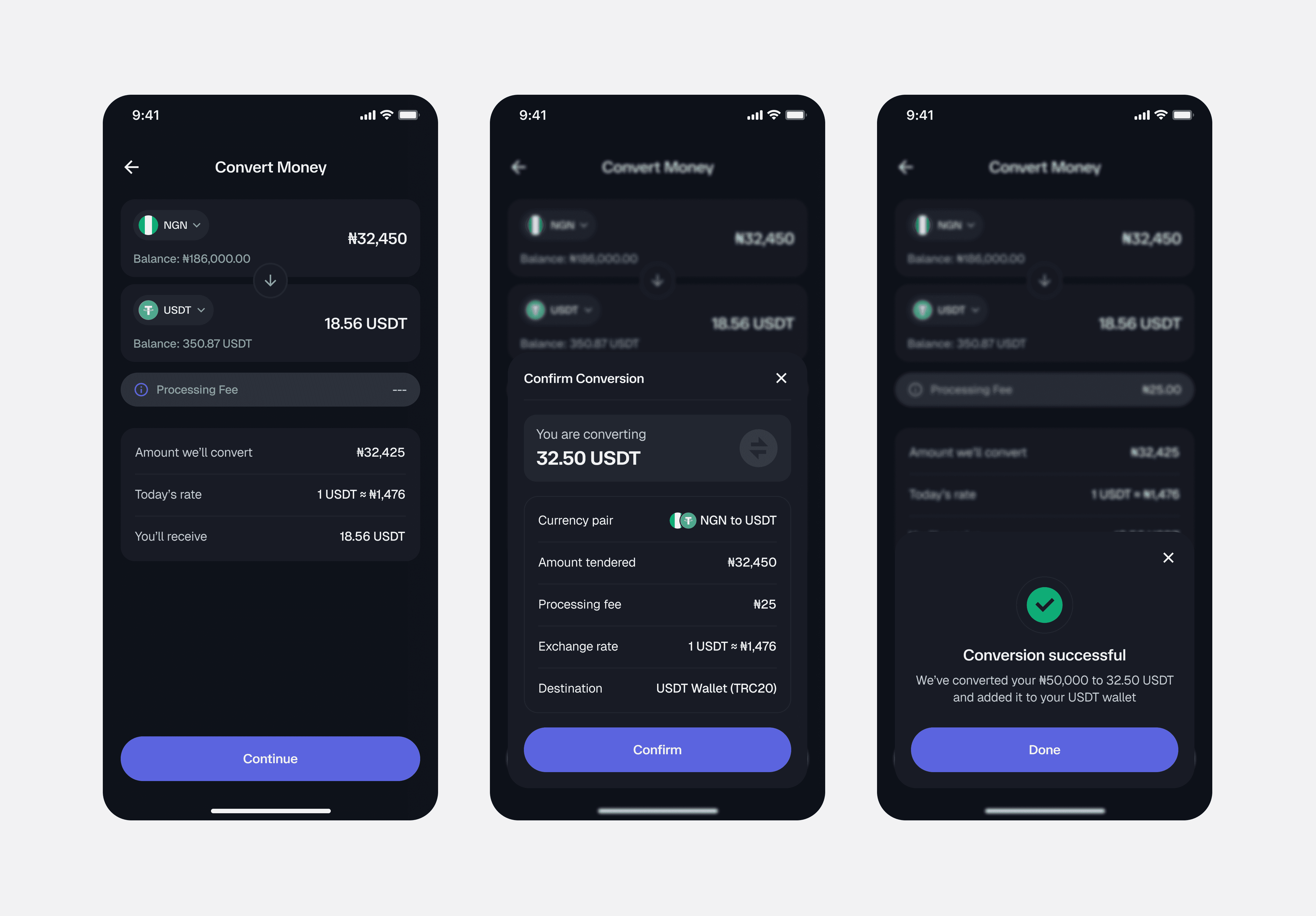
Currency conversion was one of the highest-stakes flows in the product. Users needed to trust that the rate they saw was the rate they'd get, and that there were no hidden costs waiting at confirmation.
The conversion flow was designed around progressive disclosure — users select source and destination currencies, enter an amount, and see the live rate, fees, and final received amount before committing. Nothing is hidden until after the decision. The confirmation screen functions as a summary, not a reveal.
Virtual Cards
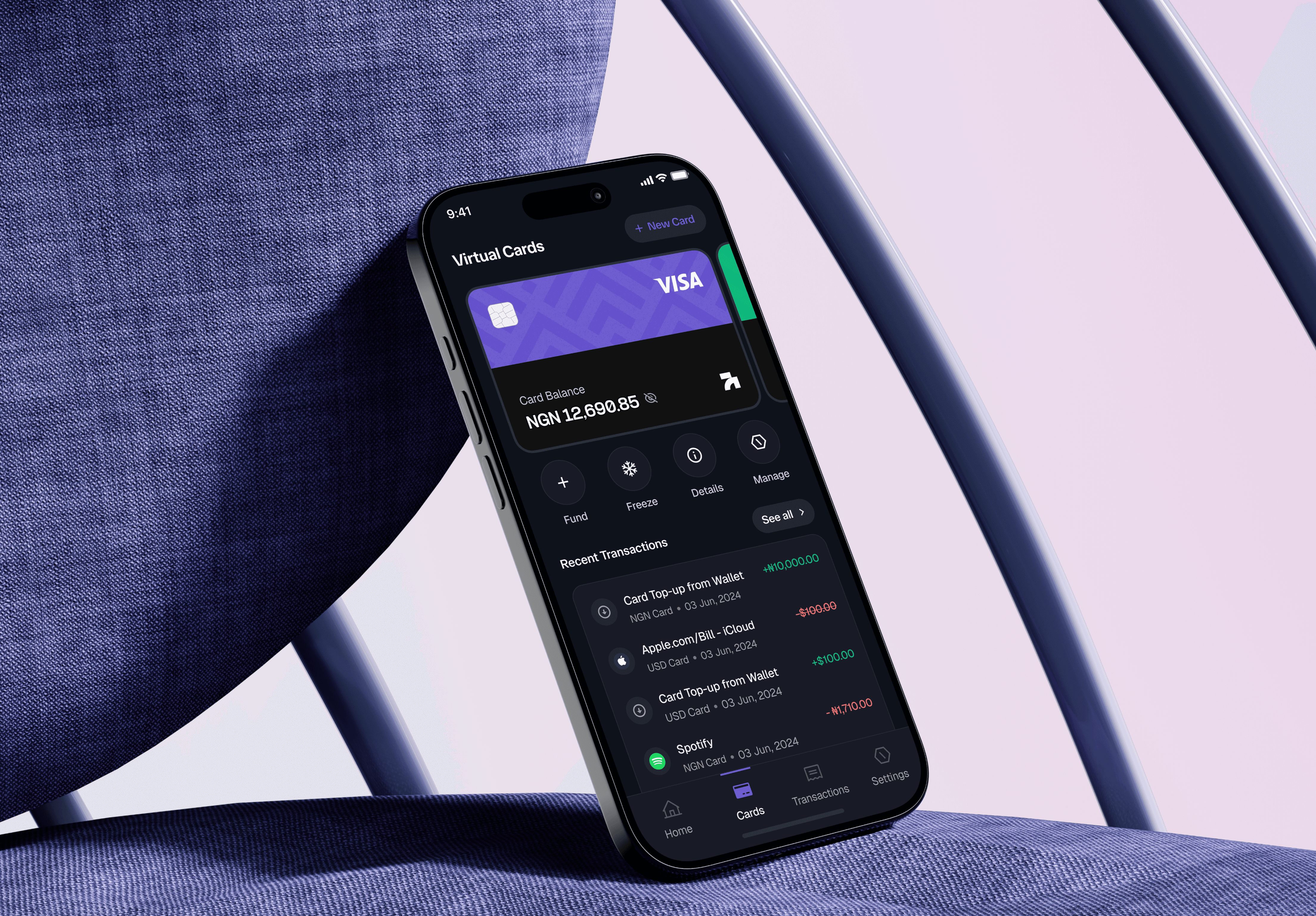
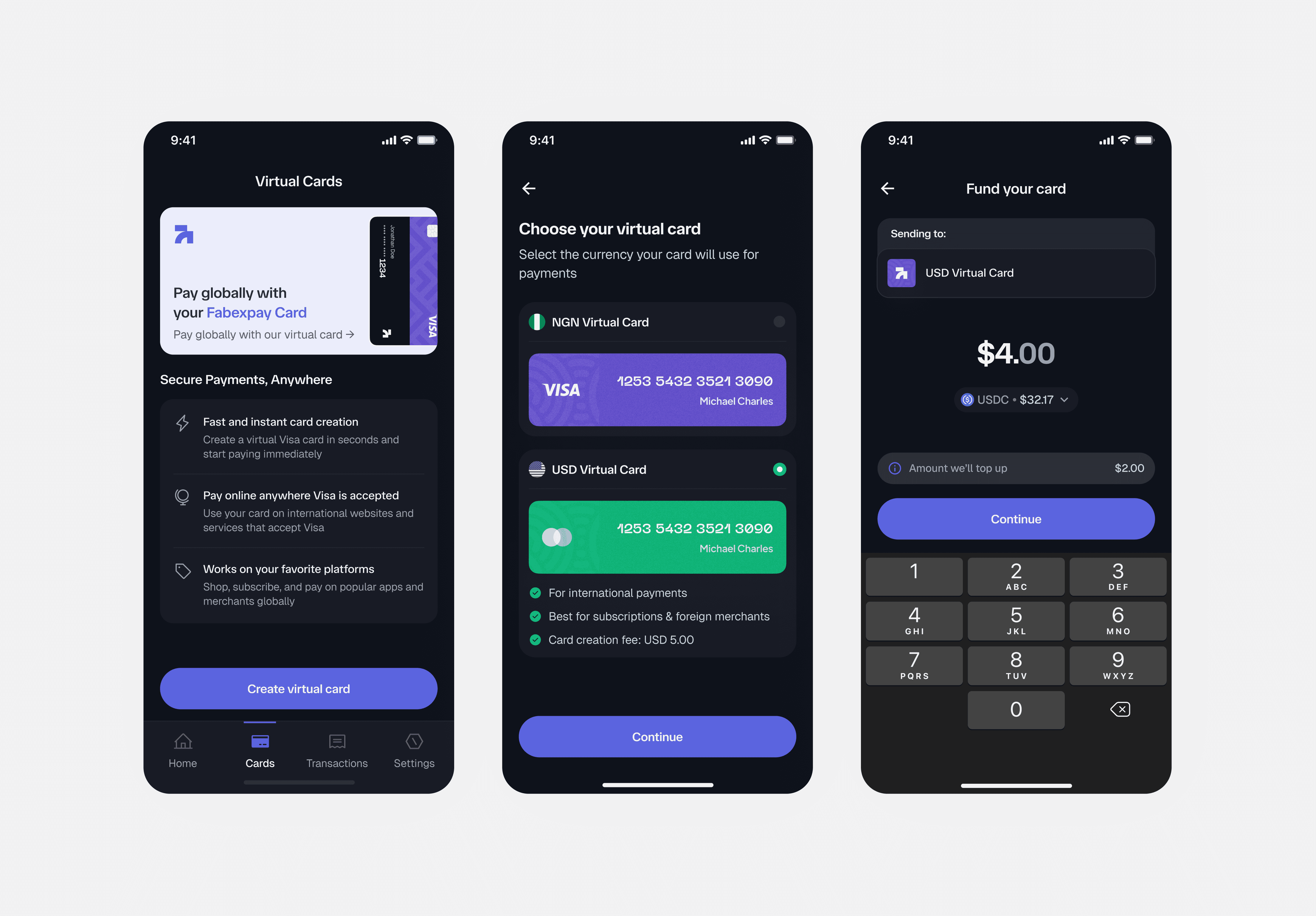
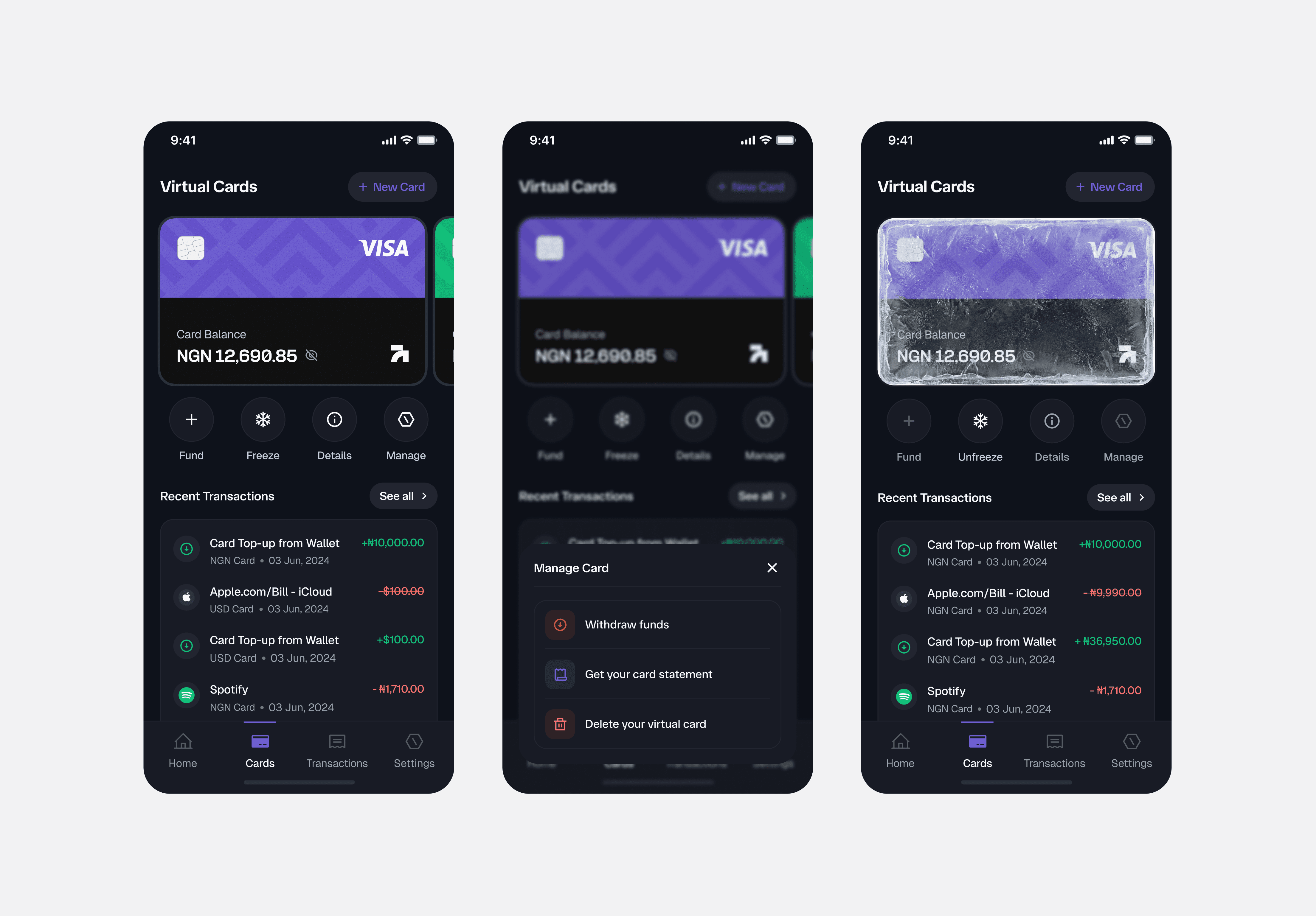
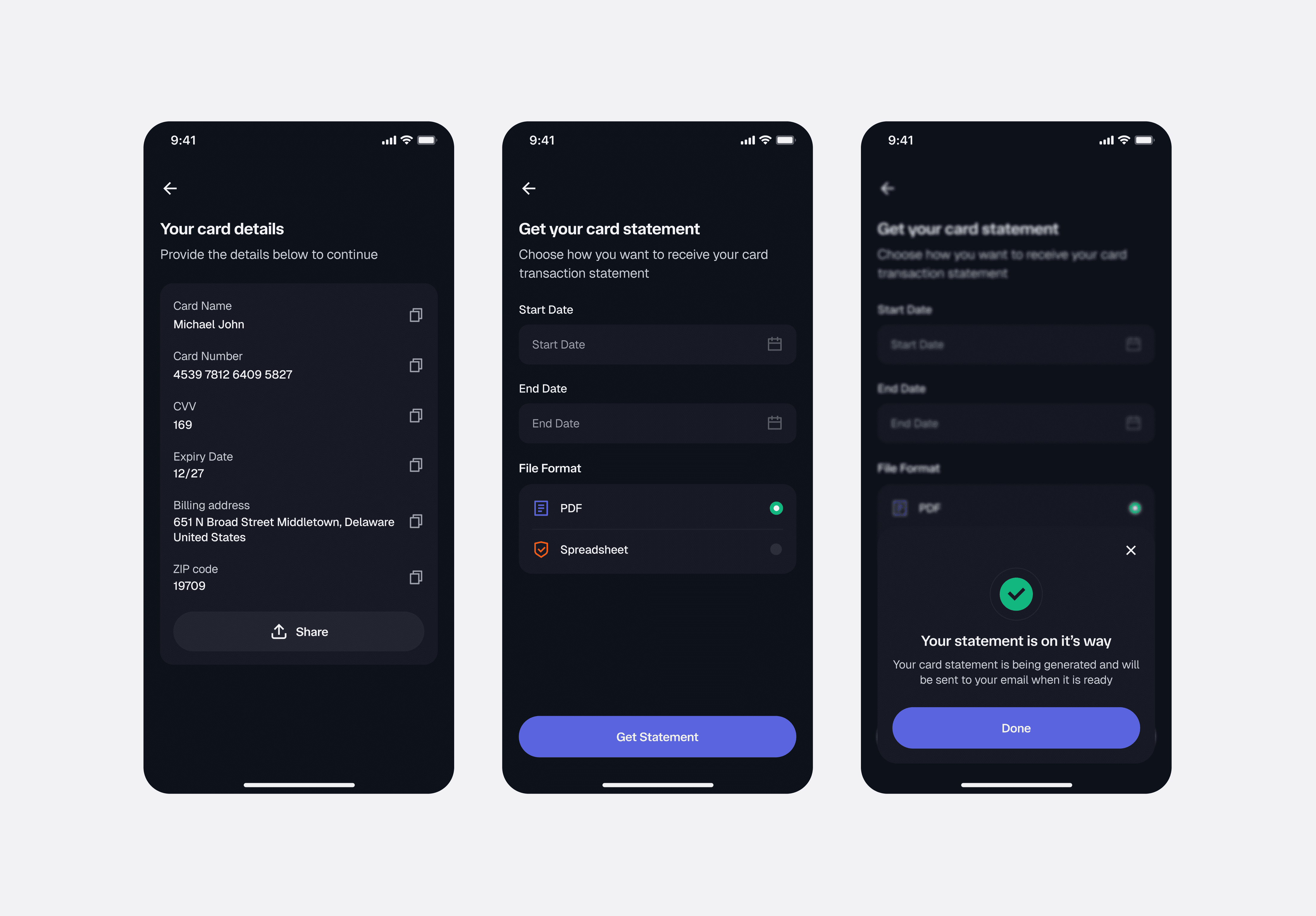
The virtual card extended the wallet into international spending. Card creation and funding followed the same transaction logic used across the rest of the product — consistent enough that users who had converted currency before wouldn't have to relearn anything to fund a card.
The card module included card details, spending controls, and transaction history, all within the same design language as the wallet.
Withdrawals
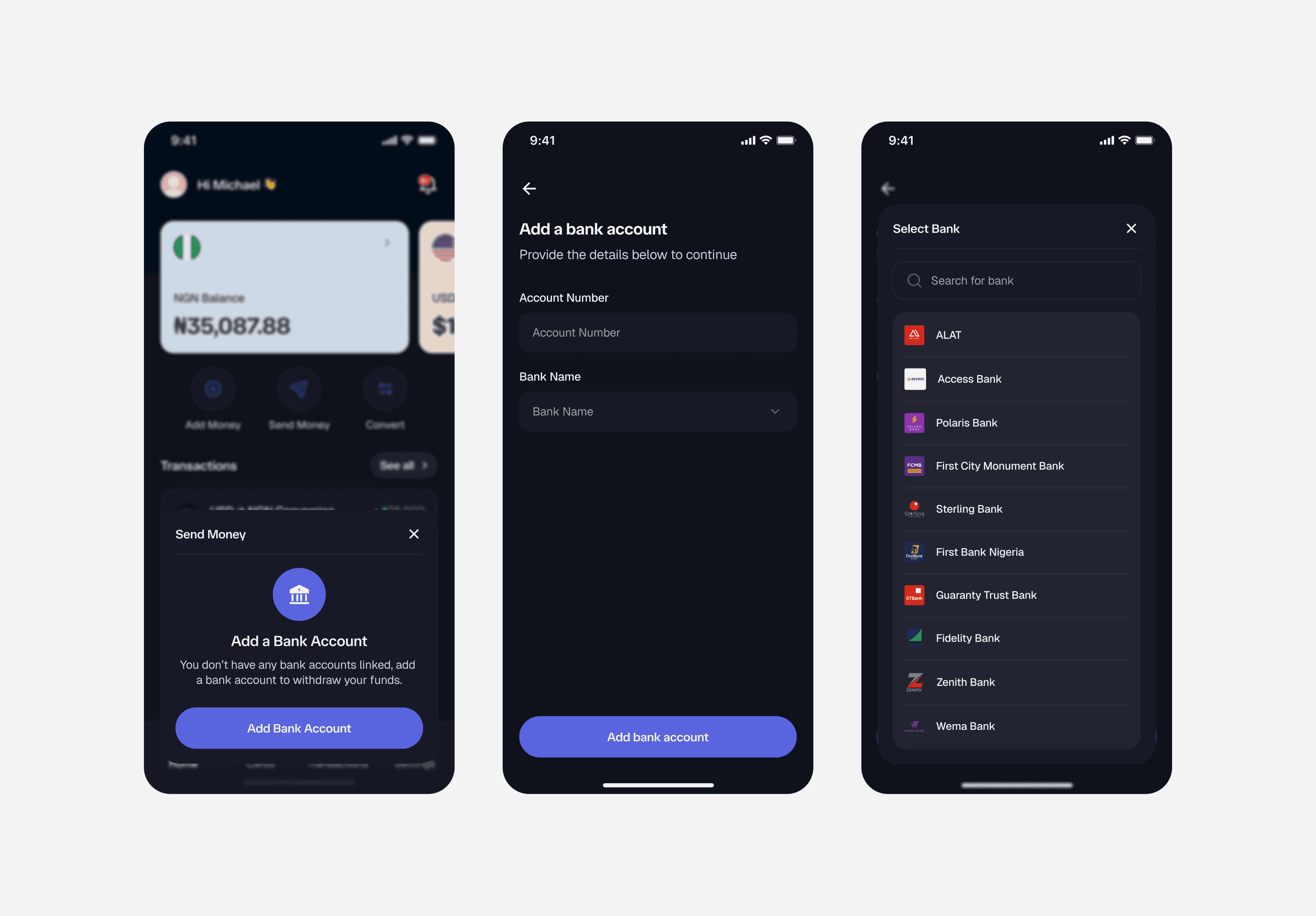
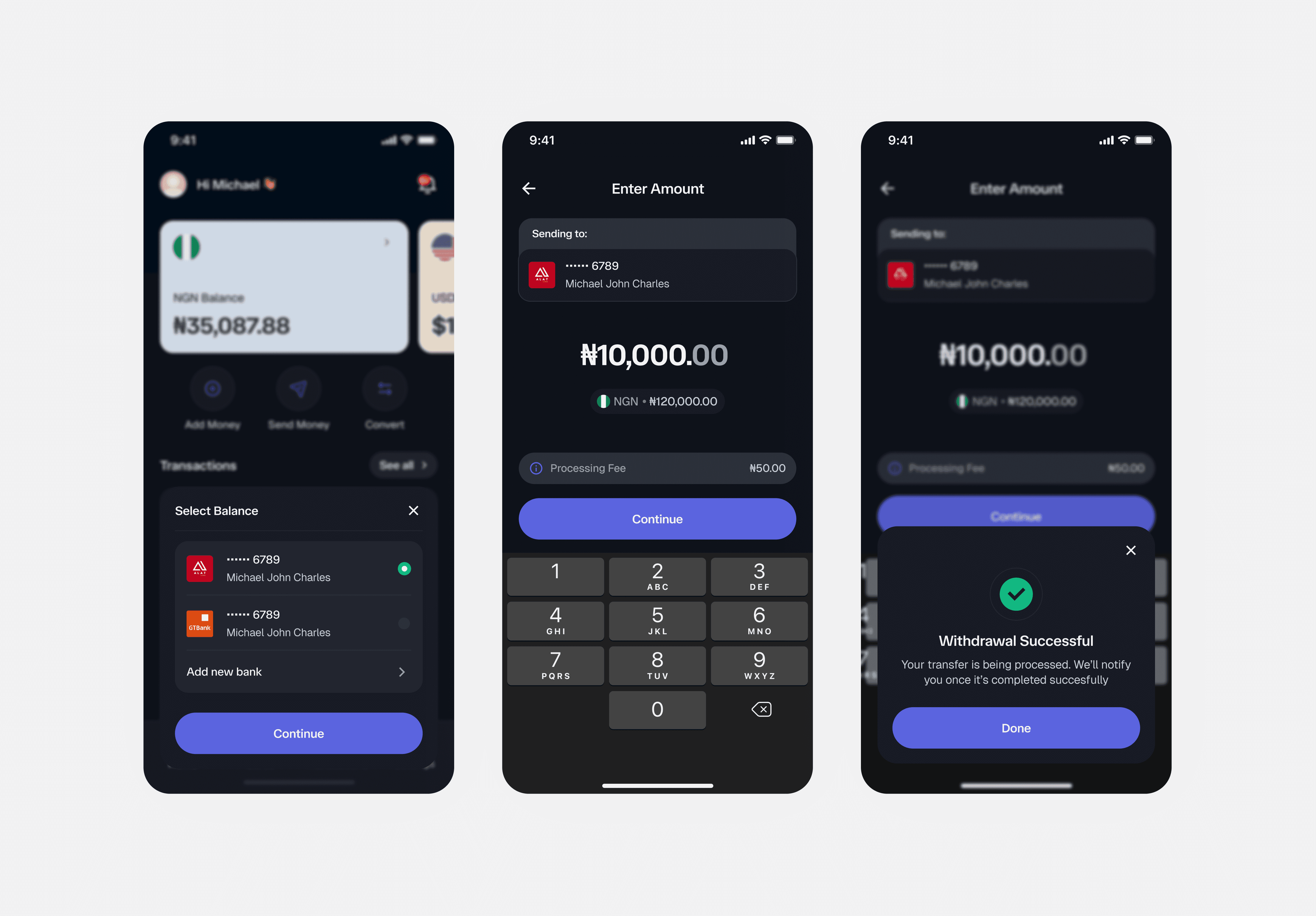
Withdrawals were the primary local off-ramp — moving Naira from the wallet to a Nigerian bank account. Because this action is irreversible, the flow was designed with an intentional confirmation step: destination account, amount, fees, and final credit all visible before submission.
The design leaned into that moment rather than trying to minimize it. A user pausing before a withdrawal is a user doing the right thing.
Settings
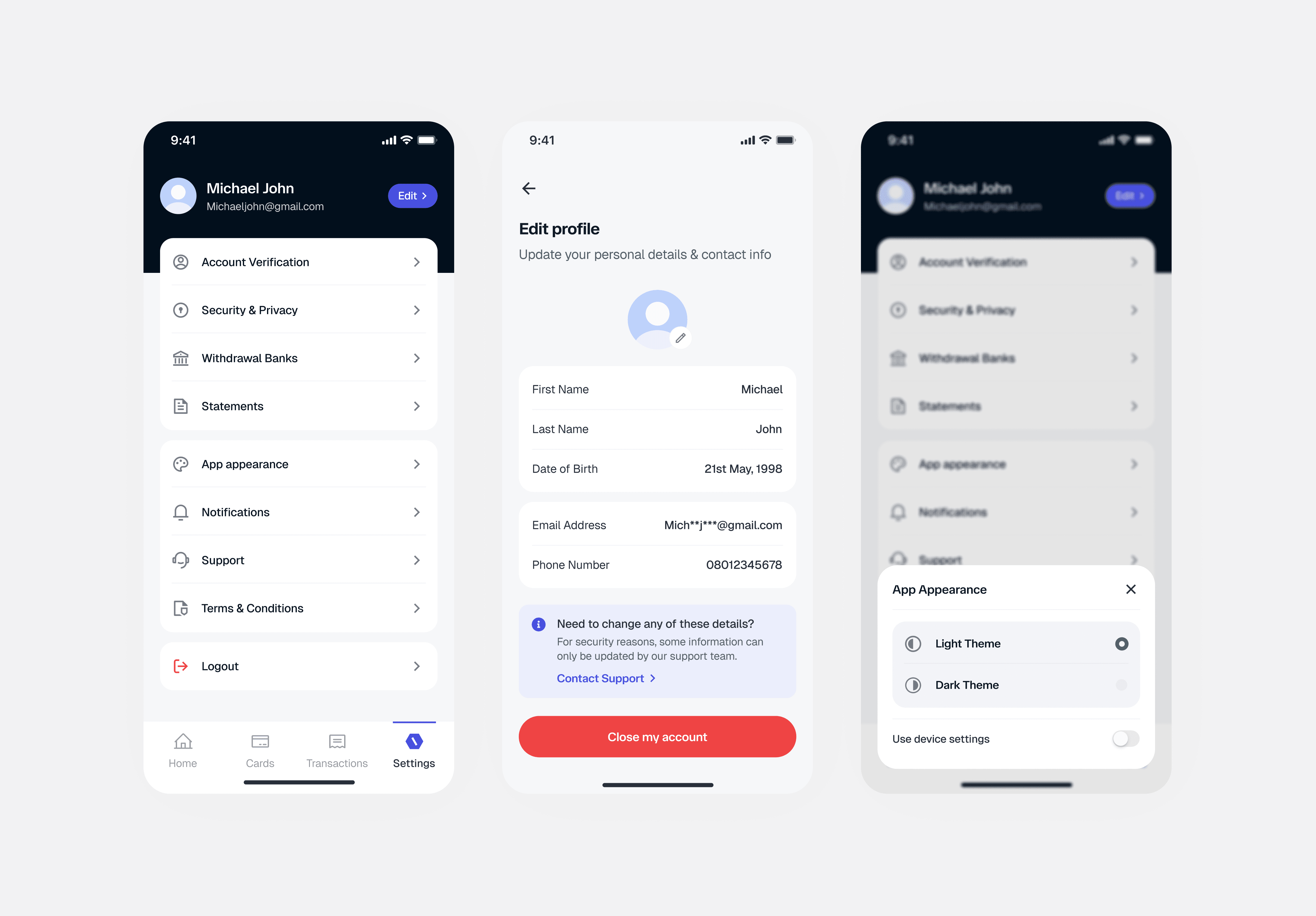
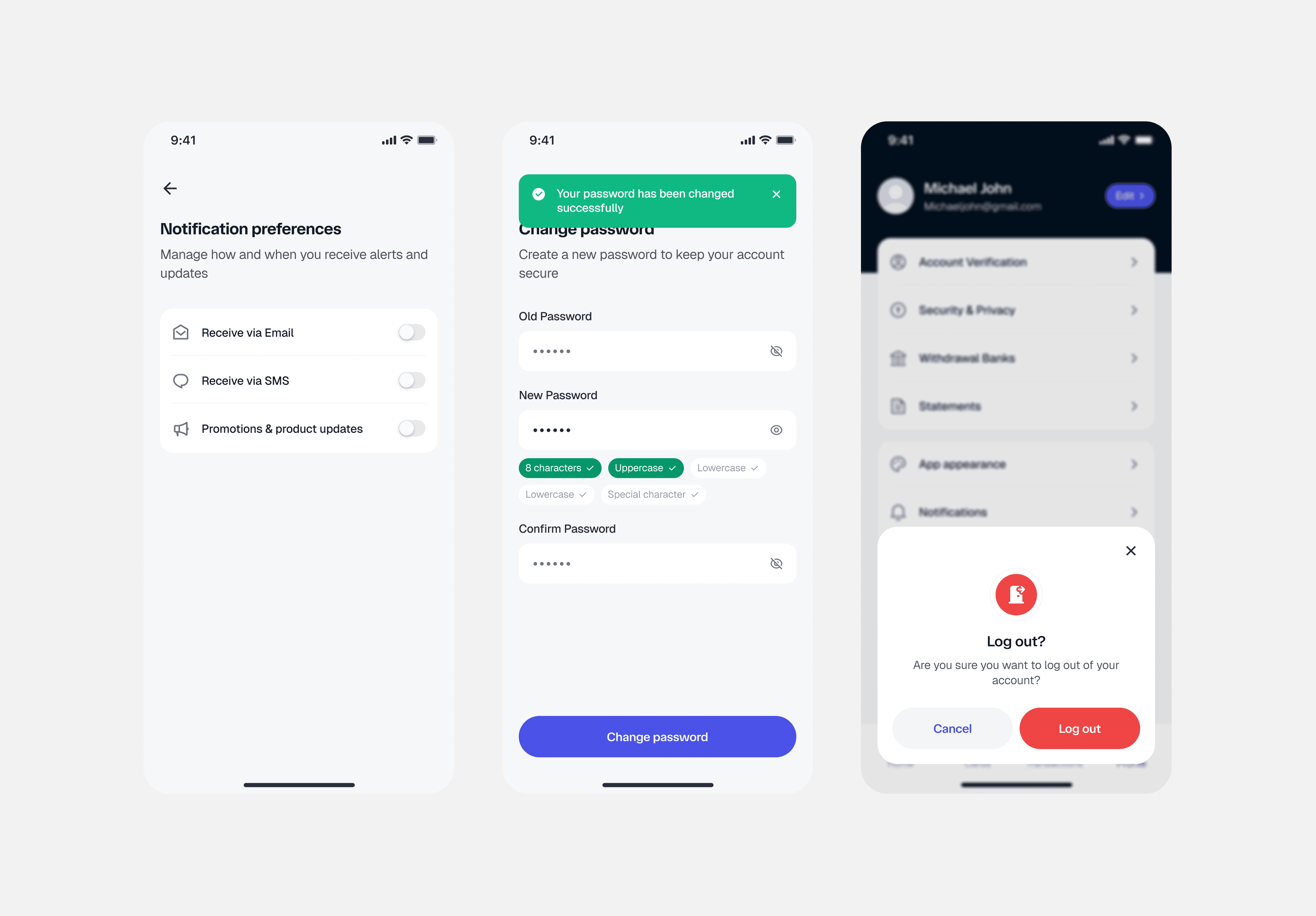
Settings consolidated identity verification, security controls, linked accounts, and notification preferences into one surface. The structure was kept flat and scannable — grouped by theme rather than nested into submenus — so users could find and update what they needed without navigating through layers.
Outcome
In four weeks, I took Fabex from a rough product idea to a fully designed mobile wallet experience — complete with a design system, defined product architecture, and end-to-end flows for the core modules.
The work gave the product a clear visual and interaction language, a structured path through the most complex financial flows, and a design foundation the engineering team could build from with confidence.